When you look at fern you are looking at a piece of our Earth’s history. Ferns are an ancient species that have been around for 360 million years. They were eaten by dinosaurs and are still useful to us today. Coal, crude oil, and natural gases are all largely made up of ancient ferns that were compressed by the Earth’s crust and made into fossil fuels. Modern day varieties evolved 45-50 million years ago, long before modern humans walked the Earth.
Ferns are an interesting plant because they do not produce flowers or seeds but instead spread their species via spores.These form on the underside of the fronds and can be eaten by bats and mice. Having no flower and a unique leaf shape helps with identifying ferns. Height is largely varied between species though, ranging from 2 inches to 30 feet tall.
The parts of a fern are called different things from flowering plants and trees.
- Rhizome: This is the part of the plant that creates the roots. They can be thin and creeping or thick and stocky.
- Stipe: Also called the stem or stalk is the part that connects the blade to the roots
- Frond: This can also be called the blade and is the leafy part of the plant. It is responsible for photosynthesis.
- Pinna: These are the smaller parts of the frond and are separate from the stalk.
- Pinnule: These are the smaller parts of the pinna and are also called sub leaflets.
Over 10,000 varieties of fern can be found world wide and 441 of those are native to North America. There are 6 varieties that are native to Iowa, including maidenhair, lady, intermediate wood, ostrich, cinnamon, and interrupted. Ferns like to grow in shady areas and can be found in forests across the state.
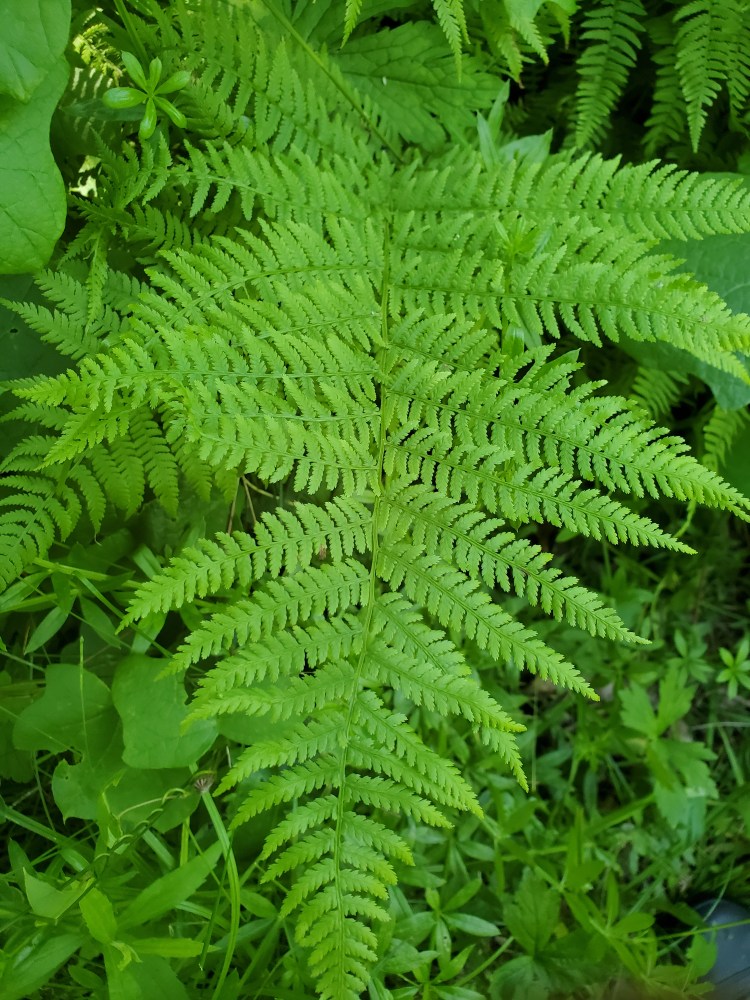
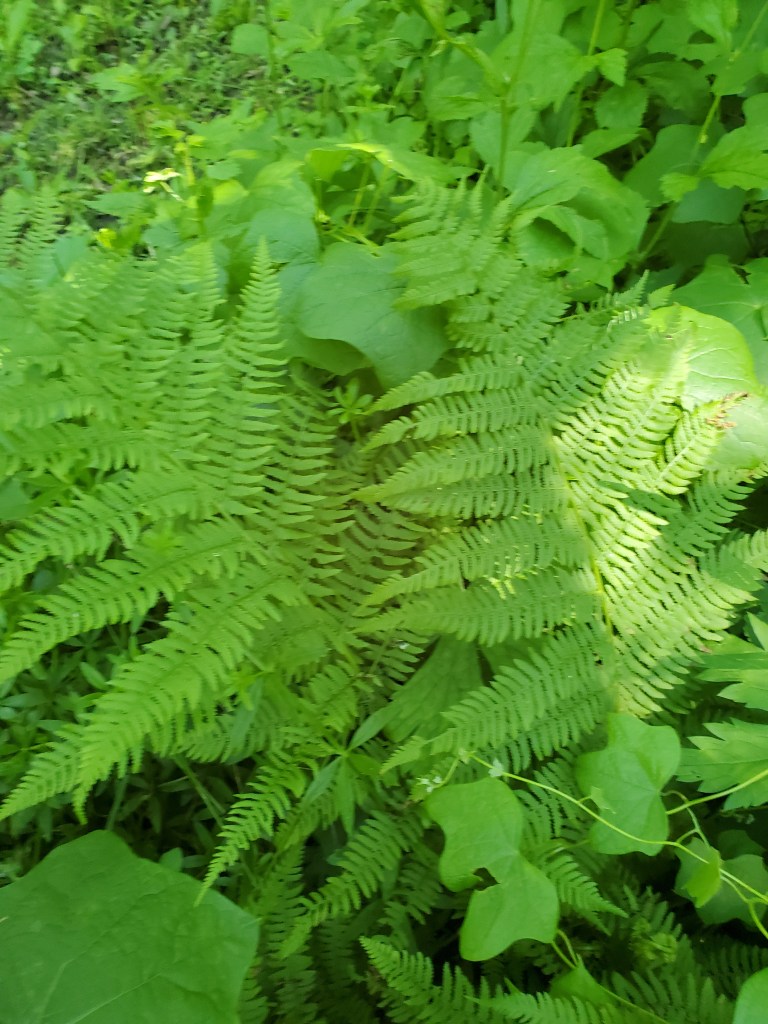
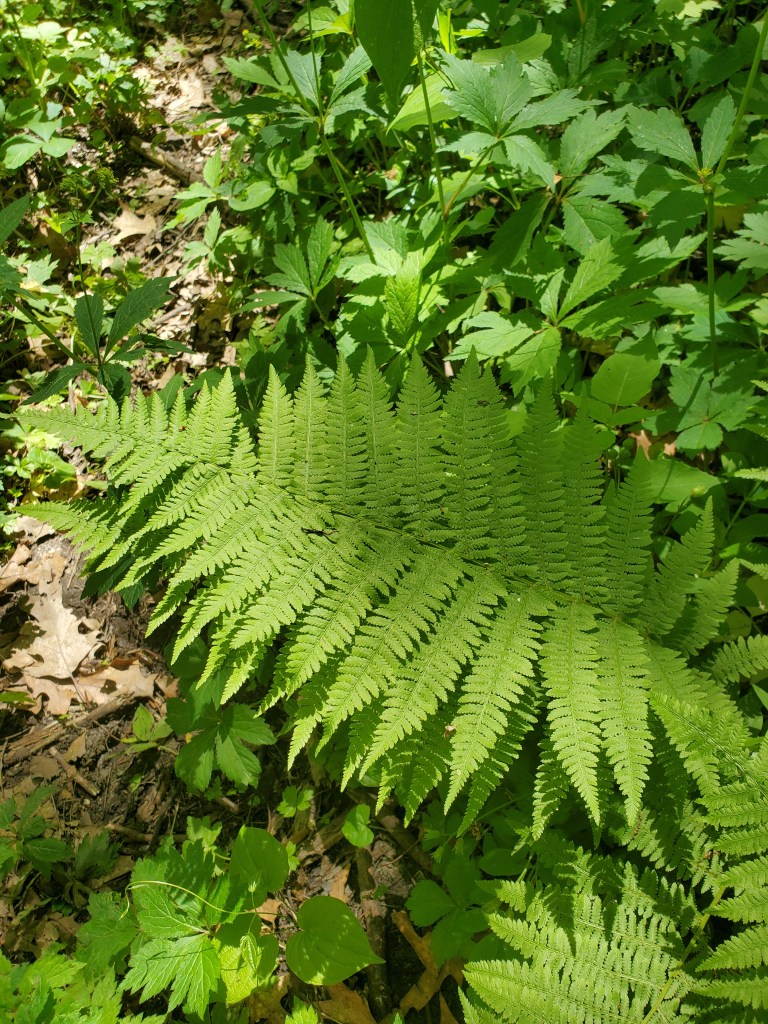
 Species Spotlights