Rhincodon typus
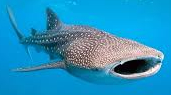
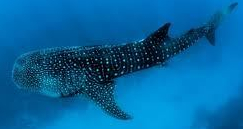
Facts
- Weight: 11 tons
- Length: 18-32.8 feet
- Habitat: Warmer areas of the ocean
- Food: plankton
- Dots on their back are as unique as finger prints
- Largest predatory fish/shark
The Unknown Giants of the Deep
A lot is not known about these gentle giants. We do not know where they mate or have their pups. Scientists also have never witness a mating event between two whale sharks so their age of maturation is still in question, along with how long they can live for. Their maximum size is also undetermined but some have been measured as long as 40 feet! All of these facts about their behavior, life, and death means that we do not how to properly protect them.
Threats
Whale sharks face threats just like all endangered species. They are caught purposefully for their meat, fins, and oil but are also the victims of by catch in nets. The species is also at risk from habitat reduction and degradation.
Another surprising threat to whale sharks is tourism. In the wild whale sharks are normally solitary but will come together to feed. This causes hot spots of tourism for people who want to swim with these gentle giants. Having humans swimming around with them can disrupt feeding patterns. Companies are also dumping food into waters to group the sharks, causing unknown issues.
Why Protect Them?
Whale sharks are important to marine ecosystems because they can help us understand the health of the oceans. Since they feed on plankton when whale sharks are thriving then so is the plankton. This could be both good or bad depending on the area. On the good side it can be an indicator of fish that are struggling due to over fishing like tuna, but they also could indicate if plankton levels are too high.
Whale sharks in the US

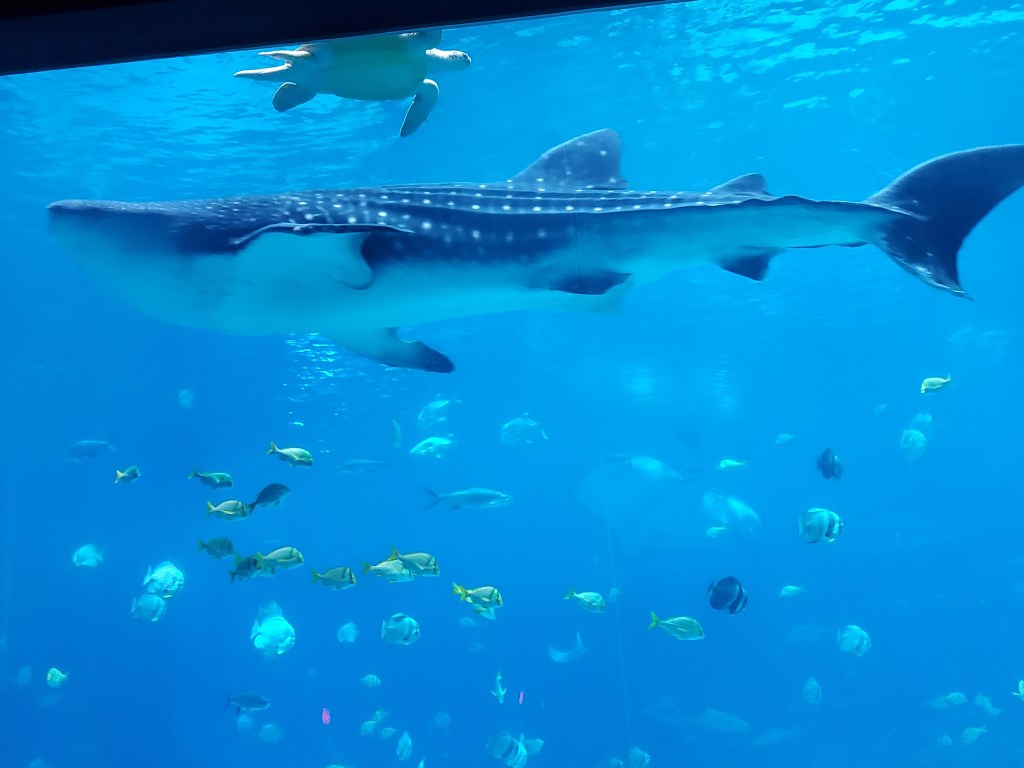


Images taken by Bailey Bergman
Did you know that there are whale sharks that call the US home? Four whale sharks have a home at the Georgia Aquarium in their Ocean Voyager exhibit. The exhibit include a giant viewing window and a tunnel that is 100 feet long. Living in the 6.3 million gallons of water are 50 species that include the whale sharks. At the aquarium scientists are able to study the whale shark up close to learn more about their behavior and allows them to get blood samples to use in genetic and health studies.
Thank you so much for reading!
Comment below to start a discussion!
Share with friends and family!
 Species Spotlights